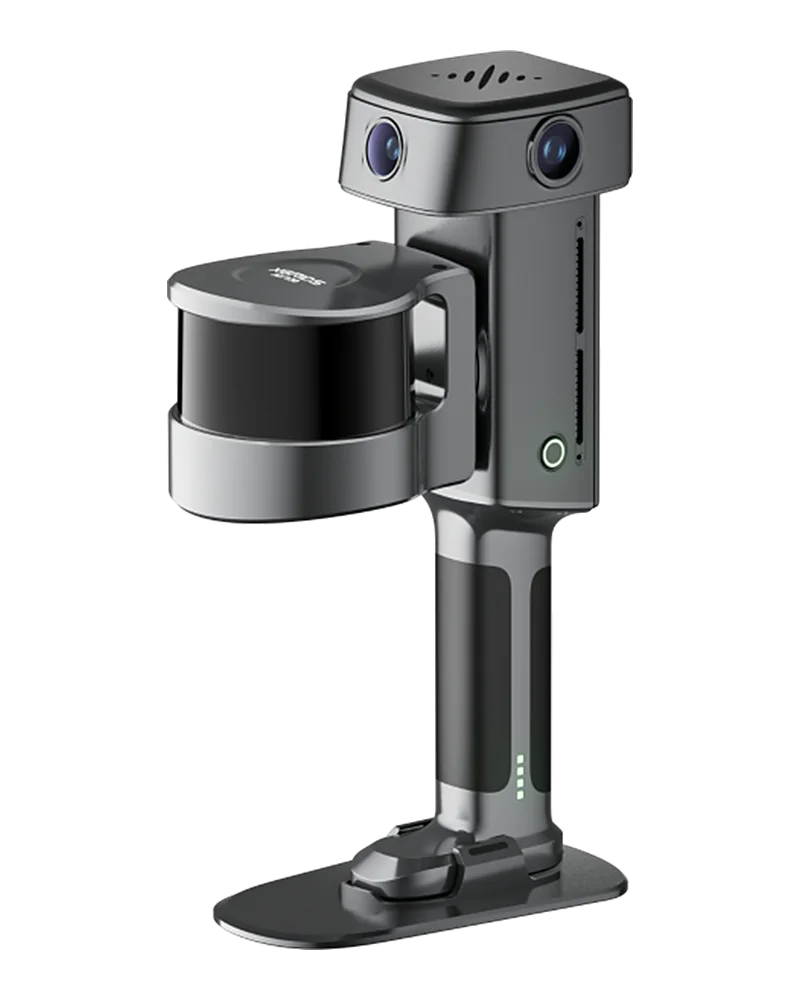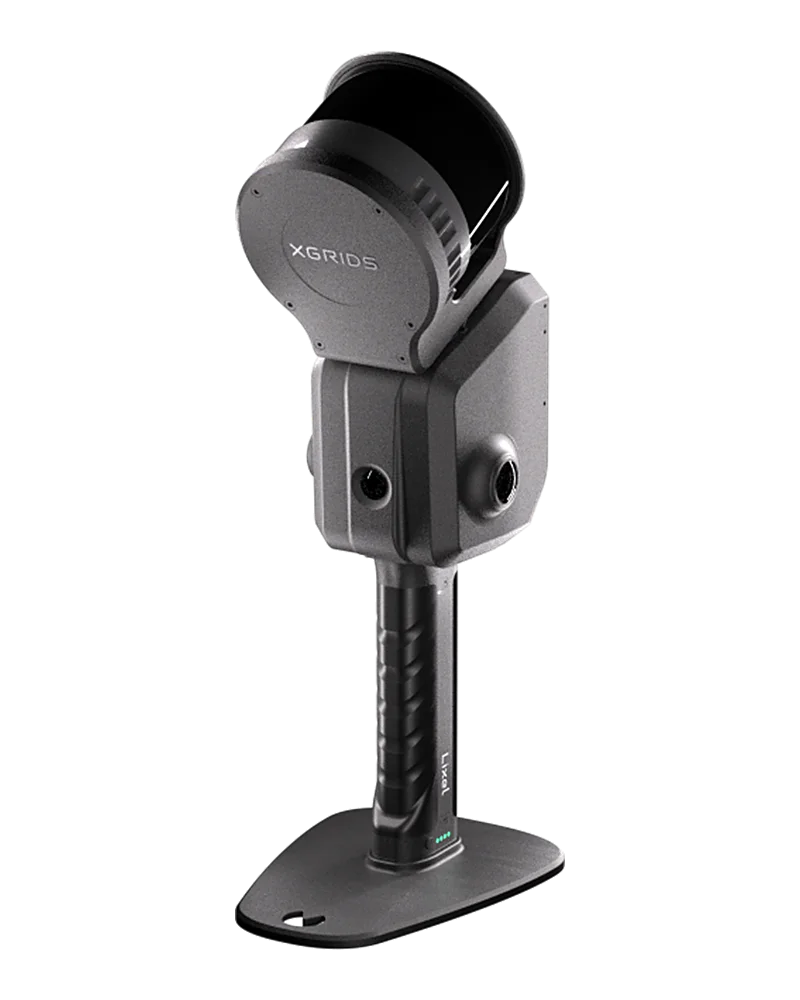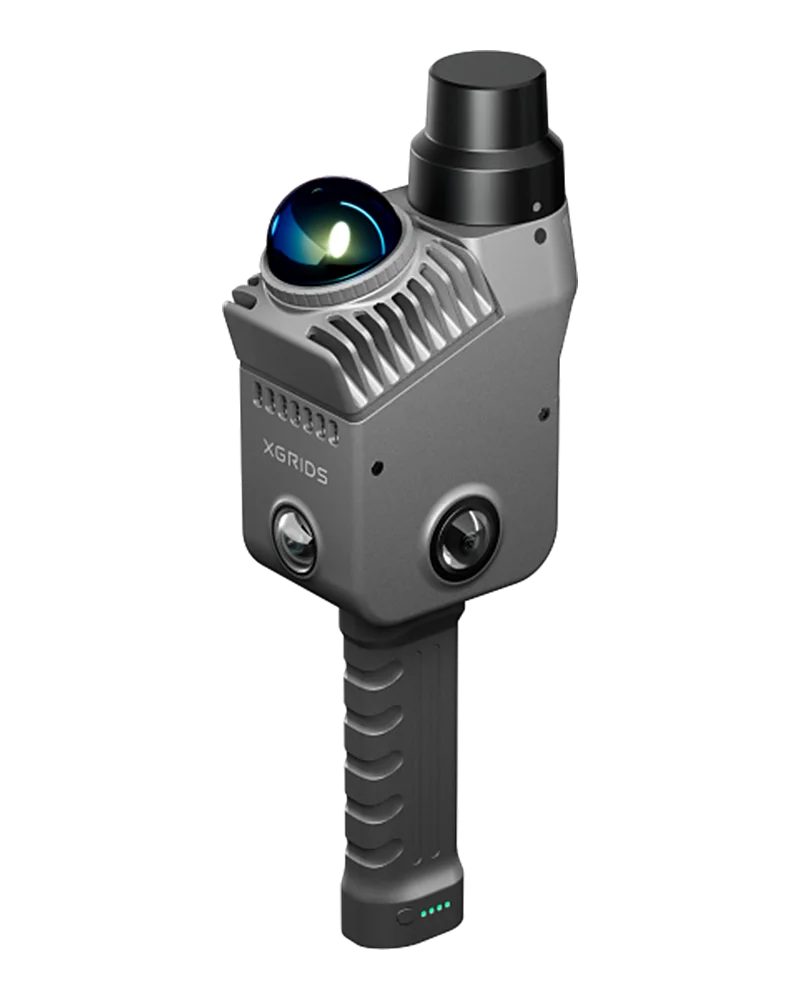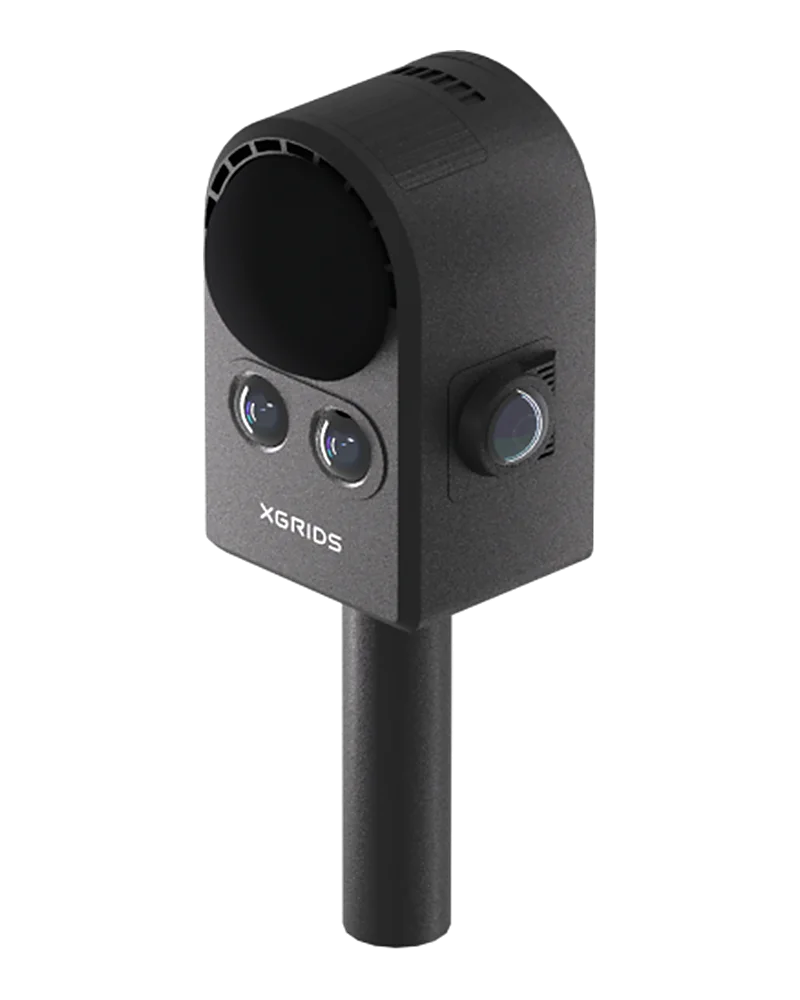

Applicable methods: Video reconstruction (phone/camera), single map reconstruction in Lixel P1 portrait mode
Special Challenges of People Capture
People are dynamic subjects with extra difficulties compared to static objects:
- People move involuntarily (breathing, blinking, shifting weight)
- Hair and clothing details are complex
- Facial expressions need to stay consistent
Full-Body People Capture
Orbit Method (Recommended)
- The subject stands still in a natural pose
The photographer slowly orbits around the subject:
- First loop: eye-level height (chest), covering front and back
- Second loop: low position (knee height), tilting slightly upward
- Third loop: high position (above the head), tilting slightly downward
- Keep the total duration within 60–90 seconds
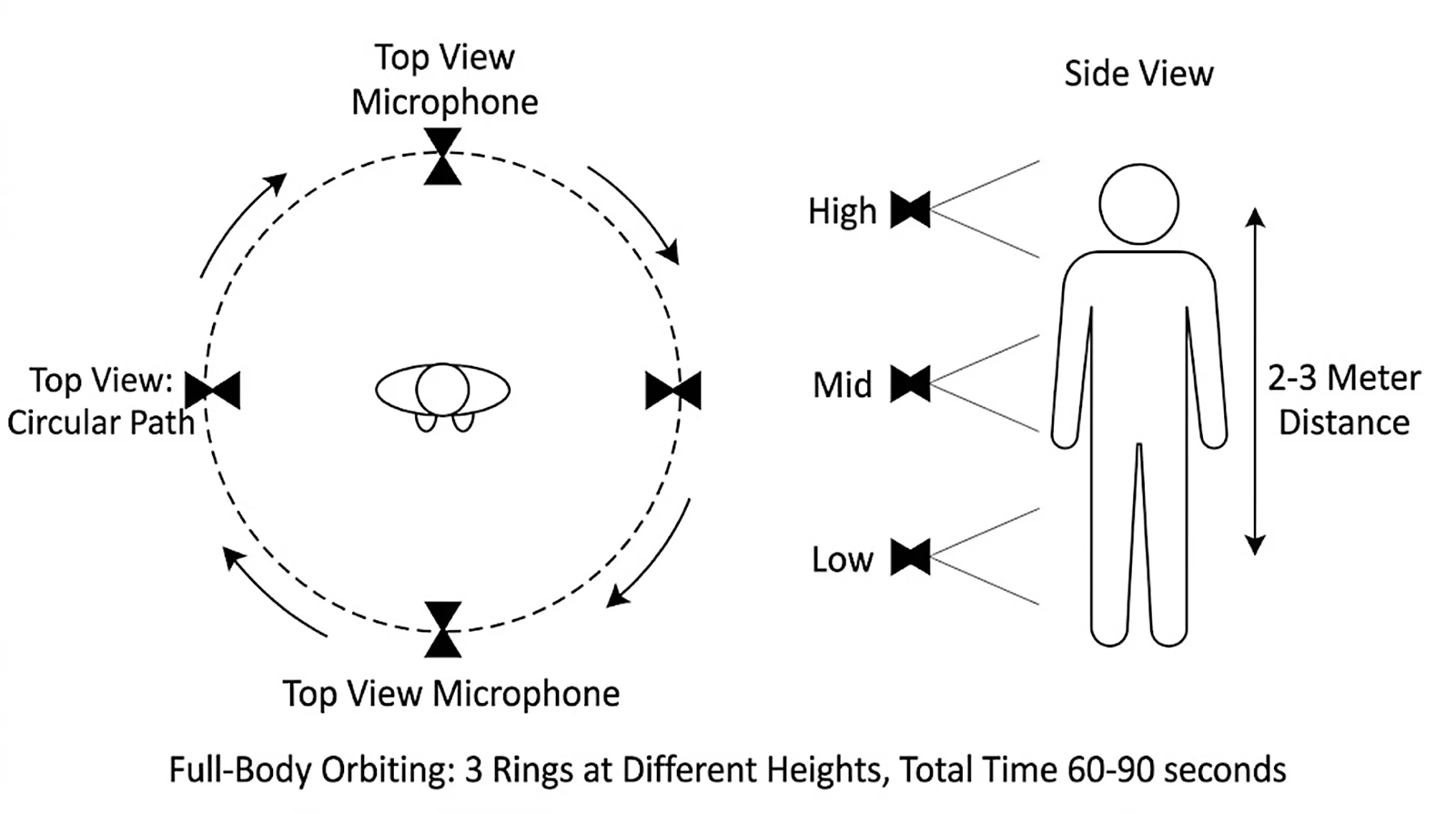
Full-body people orbit capture path
Key points:
- Tell the subject to stay completely still (do not talk, do not blink)
- Shoot quickly (it is hard for people to stay still for more than 2 minutes)
- Avoid casting the subject's shadow onto themselves
Head/Half-Body People Capture
- The subject sits on a chair with a neutral facial expression
The photographer moves slowly in an arc 0.5–1 m in front of the subject:
- From the front to 90° on the left
- Back to the front, then to 90° on the right
- From the front to above the head (top-down)
- Total duration 30–60 seconds
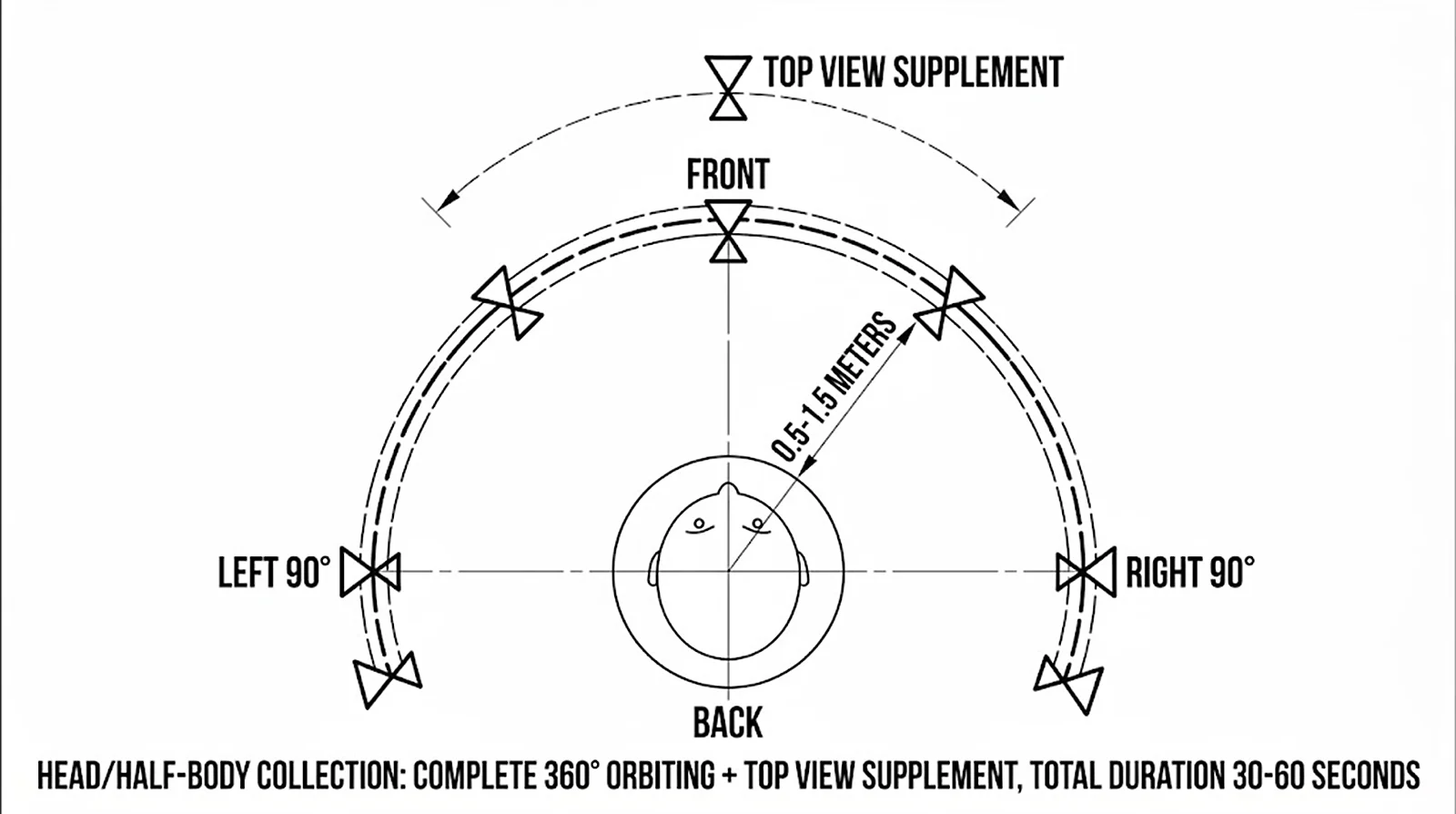
Head/half-body capture arc path
People Capture Parameter Recommendations
| Item | Recommendation |
|---|---|
| Distance | Full body: 2–3 m; half body: 0.5–1.5 m |
| Orbit speed | As fast as possible without blur (about 1 m/s) |
| Total duration | Full body 60–90 s; head 30–60 s |
| Lighting | Soft frontal light, avoid strong side light causing half-face shadows |
| Background | Clean background, contrasting with the subject's clothing |
| Shutter speed | ≥1/500s (freeze micro-movements) |
People Capture Considerations
- Hair: Dark long hair easily loses detail; ensure sufficient lighting
- Glasses: Lens reflections produce artifacts; recommend removing them or using a polarizing filter
- Loose clothing: Clothing fluttering in the wind produces artifacts; choose fitted clothing
- Multi-person scenes: Capture only one person at a time, others leave the frame
This chapter is from the official XGRIDS user manual. Official source (opens in a new tab) · Updated: